Portrait Photography Gear Guide: What I Use and Why
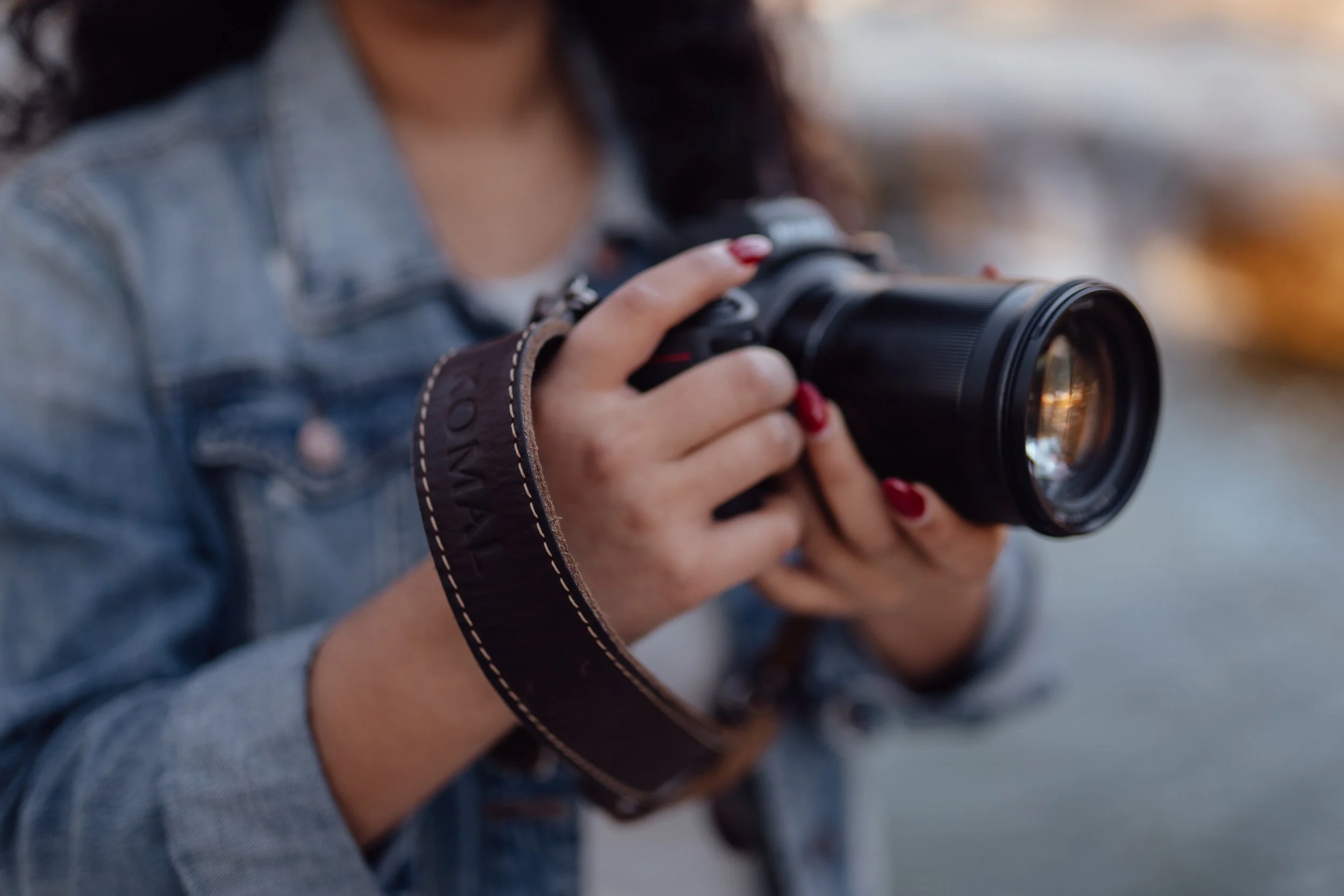
Photo by Joy Yang
One of the questions I get most often is, "What do you shoot with?" So I thought I'd break down the gear I bring to most sessions and why I choose it. While equipment isn't everything, having the right setup helps me move quickly, stay flexible, and create images that feel true to my style.
My Camera Bodies
I shoot on two camera bodies for almost every session. It's simply faster for me to switch between focal lengths without having to change lenses mid-shoot. Right now, my main pair is the Nikon Z8 and Nikon Z6III. Fun story—the Nikon rep at Precision Camera sold me on the Z6III's low-light capabilities, and he wasn't wrong. It's exceptional in challenging lighting, plus the eye tracking is even sharper than previous models. I also love the flip-out screen for those creative angles, and the lighter weight is a lifesaver during long Texas wedding days or outdoor summer sessions. The Z8 is still my workhorse and I love it so much that I may eventually pick up a second one for consistency, but the Z6III has absolutely earned its place in my bag.
I also have a Nikon Z6II at home—my first mirrorless camera, which I keep for sentimental value. It doesn't come to sessions often, but it's perfect for photographing my dogs and the pollinators that visit my garden, especially the bumble bees that like to visit my mealy blue sage. Those everyday moments when I want to pick up a camera without hauling my full setup.
When I'm traveling, I shoot on a Fujifilm X-T50. It's small, has interchangeable lenses, and offers the same film simulations that its much more popular (but marked up and never in stock) counterpart the X100VI went viral for. It's the perfect travel companion when I don't want to pack my full Nikon kit.
My Go-To Lenses
If you've ever shot with me, you've probably seen my 50mm f/1.2 glued to one camera and my 24–70mm f/2.8 on the other. The 50mm has always been my favorite focal length—on a full-frame camera, it closely mirrors natural human perspective. It helps the photos look natural and like a memory rather than a photograph because it reflects what you'd actually see standing in that moment.
The 24–70mm gives me the flexibility I need for environmental portraits. I really like to frame my subjects within existing frames when possible—doorways, windows, architectural elements—and having that zoom range allows me to adjust my composition to include different elements without having to reposition constantly. I'm anxiously awaiting the day Nikon releases a 24–70mm f/2; I'll be pre-ordering it as soon as possible.
Depending on the location or lighting conditions, I may switch things up. I own several other lenses that come out for specific situations:
The 35mm f/1.2 is great when I'm shooting candid moments during weddings where I want to add context or interest to the image by incorporating more of the environment. It allows me to capture those authentic moments in low-light situations without being intrusive with flash.
The 85mm f/1.8 is my go-to for headshots. It provides a flattering amount of compression without distorting features the way a longer focal length would.
The 135mm f/1.8 is perfect for creamy backgrounds or capturing guest reactions during events and wedding ceremonies from a distance.
The 70–200mm f/2.8 serves a similar purpose to the 135mm but provides more flexibility with the zoom range. The trade-off is that it's significantly heavier, so I only bring it when I know I'll need that versatility.
The 14mm f/1.8 is mostly reserved for creative shoots and personal projects where I want to play around with perspective and create something more experimental.
Lighting Gear
For on-camera flash, I use Godox V1 flashes paired with MagMod modifiers. These are my go-to for wedding receptions or indoor shoots in dimly lit spaces where I need quick, portable fill light. I'll occasionally pull them out during portrait sessions, but usually they come along just in case lighting conditions change.
When dramatic lighting is part of the plan—like for headshots or a location that really calls for it—I'll bring an off-camera flash setup. My go-tos are the Godox AD400 or AD600, usually paired with Glow EZ Lock modifiers. These strobes give me the power to overpower ambient light when necessary and create the soft, directional quality I'm after.
Film Cameras
I own more film cameras than I probably should, but the ones I use for client work are my Canon EOS Rebel G and Nikon F5. They're reliable workhorses that add a few nostalgic frames to a session without slowing down the workflow. I offer film as an add-on for sessions.
For client work, I typically shoot Kodak Portra 400 or 800 because of the way it captures skin tones—there's a warmth and organic quality that's hard to replicate digitally. For personal work where I'm experimenting, I'll use Fujifilm 400 since it's slightly more cost-effective, though I also love shooting Kodak Ektar and Color Plus when I want to play around with different color palettes.
How I Pack for Sessions
How much gear I bring depends on the shoot. For general portraits, I typically pack light: my two main camera bodies, the 50mm and 24–70mm, and a Godox V1 in case I need a touch of fill. I usually skip the off-camera flash unless we've discussed it ahead of time or the location absolutely requires it. Keeping things streamlined helps the session feel natural and keeps us moving without technical interruptions.
At the end of the day, gear is just gear—it's a tool that helps me do my job well, but it's not what makes a great portrait. What matters most is the connection we build during our time together and those genuine moments we capture. That said, I'm always happy to talk cameras and lenses if you're curious about the technical side of things. And if you're interested in adding film to your session or have questions about what to expect, just ask. I'd love to work with you.
